Let’s recap this series:  First, I explored how the purpose of an association is to bring together contributions from members to accomplish something for those same individuals that would be more difficult to do on their own.  Second, I explored how a number of trends are changing the external environment in which associations operate.  Finally, here are a few practical suggestions for how your association can embrace these trends and avoid becoming obsolete:


  • Get familiar with the external trends that may make your current association value proposition irrelevant.

    I’ve outlined four megatrends in a previous post.  There are likely more that are specific to the industry or profession your association serves.  A good place to start is the Bureau of Labor Statistics’ Industry at a Glance and Occupational Outlook.  For state associations, check with your state government on economic trends and statistics in your area.  ASAE, the professional association for the association community (and, in the interest of full disclosure, my employer) also produces a wide range of research and trend reports.

  • Review your portfolio to assess which of your offerings help potential members do things easier. 

    Better yet, have someone outside your membership conduct this review and determine if your solution is enough to convince her or him to join. If an offering doesn’t pass muster, either re-engineer it or seriously consider dropping it.


  • Closely consider the needs of your target market to determine the greatest challenges that you can help them overcome. 

    What can the collective resources of your association do for members that individual members cannot do for themselves?

 ·   How can you help employees and employers in the changing employment environment (job tenure decreasing, job mobility increasing, and dual-earner households increasing)?


·   How can you help members’ organizations better compete in the new global marketplace?


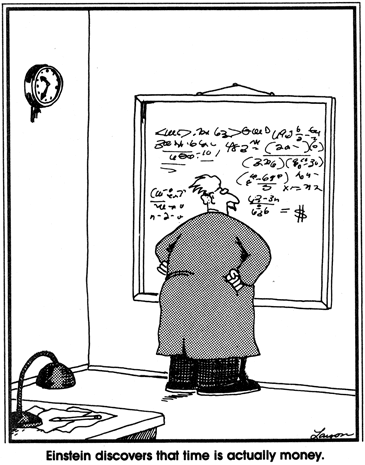
·   How can you help members manage time, their most irreplaceable commodity?          


  • Make it easy for members to get immediate quality answers and assistance. 

    The Ritz-Carlton famously instructed employees to anticipate guest needs such that the Ritz-Carlton experience “fulfills even unexpressed wishes and needs of our guests.”  Your association must do the same – meet the needs which members tell you about, and lead your members by preparing them to solve challenges proactively before they become PROBLEMS.


  • Prepare for the future. 

    Explore the business and societal trends changing the external environment in which your members operate.  Begin to develop capacities in new areas to redirect and serve future needs.  (An area I plan to blog about in the near future.  Would love your ideas on this too!)


  • Keep members informed of the value you provided to them. 


Previously, I explored how associations bring together contributions from members to accomplish something that would be difficult to accomplish individually.  Based on the positive receptions from association thinkers like Jeffrey Cufaude, Shelly Alcorn,  Cynthia D’Amour, Tony Rossell, and David Gammel I think there may be something to the idea that the value provided by associations is under fire because the world in which associations operate is changing.  So what are some of those changes in the external world that may be making association participation less necessary?


  • The Internet and mobile technology give unprecedented access to knowledge. The rise and growth of the Internet, which was only commercialized in the mid-1990s, is astounding.  Today, individuals can find and do almost anything easier, faster, and cheaper than they could in 1995 - career advice, technical training, networking connections, legislative tracking and responsive advocacy, competitive product pricing, vendor selection, buying advice, and nearly limitless content in every category. These same activities were the bread and butter of associations in the mid-90s – and sadly, many associations still see these as their exclusive domain.  The worth of these activities have not changed – people still want them all – but changes in the external environment mean that these very same activities may no longer be “valued benefits” if individuals can achieve similar results elsewhere easily and affordably without an association.


  • The commercial landscape has changed.  Nearly every association is also directly impacted by the economic condition of its members.  And the reality is that the external operating environment is wreaking havoc on many of those members.  The rise of the Internet has facilitated interstate and international commerce in ways that challenge traditional business operating environments (such as location, fulfillment, design, even staffing) and often create a race toward the lowest possible price.  Consumer access to increased amounts of information puts new pressures on profit margins and operating processes, as well as providing consumers with a powerful collection of feedback from other customers that influence buying decisions.  The new normal is an intensely competitive, open environment, often accompanied by with less generous profit margins.

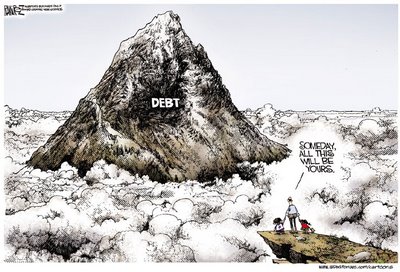
  • Competition for resources has increased.  Regardless of its focus, associations are impacted by the people who comprise its membership.  And the external environment of those members is changing too.  During the 1990s, the number of dual-earner households broke the 50% barrier, making two working parents the predominate model.  It is not a surprise that in 1995, a Cornell research study found that more than half of Americans reported that they “‘almost never’ have time on their hands.” More recently, a Harris Interactive poll reported that leisure hit an all-time low, decreasing 20% from the previous year and a total of 10 hours since tracking began in 1973.  And if that were not enough, household debt, which has risen slowly over a long period, doubled between 2000 and 2007.  Our members ─ and potential members ─ have less time, less control of their schedules, and increased financial commitments.          

What are your reactions to these statistics?  What other significant external trends do you see that challenge the value that associations provide? Join me in my next post to see my thoughts on what associations should be doing to prepare for the future.


The fabulous Shelly Alcorn, CAE is "SICK AND TIRED of the questions about ‘what is the value of membership.’" I loved her post, most of all her observation that you can find the roots of modern associations in the associating that happened in the symposiums of Ancient Greece, guilds in Medieval Europe, and salons of the Renaissance.  Shelly points out that associating is rooted in the universal human need for connection.  I’d add that associating also reflects a human need for individuals to come together to accomplish things they cannot do easily for themselves. 

 “Associating” bodies whether a social club, fraternal organization, neighborhood, workers union, sports team, trade association, professional society, Facebook, credit union, LinkedIn, or Kickstarter – whether formal, enduring structures or short-term collaborations – all have a cost of participation.  It may be giving of your time; your attention; your talents; a commitment to your fellow members or certain ideals; or giving up the freedom of choosing the color to paint your house, conceding to be advertised to; and yes, in many cases, money – whether called membership dues, participation fees, donations, or “financially backing a project.”  Whether the cost of participation is worthwhile depends on the perceived value of the return on that investment.  That is, does participation provide a result that is 1) desired and 2) worth the effort when compared to the alternative of achieving a similar outcome another way. 

What is frustrating about many conversations about the “value of membership” is that they often devolve into “Is our price point still relevant for the programs, products and services we offer?”  What is most challenging in my mind is that these conversations tend to focus on the cost and avenues of participation, and fail to recognize what may be a bigger challenge:  if associations are designed to help individuals accomplish things they cannot do easily for themselves, we need to think long and hard about the fact that it is not as hard to do many things for yourself as it used to be.
 
Two quick examples: 

AAA: Growing up, we used to take a fair number of family vacations by car.  And critical to that was a membership in the American Automobile Association.  Not only did AAA give us assurance that we could get a tow if we needed one, it also got us the best available rates on hotels, and made custom highlighted TripTiks®, customized step-by-step maps to navigate our trip.  In the 1970’s, all three of these were extreme value adds.  In fact, to this day, I remain a member of AAA because they still have the best hotel rates, and they will take care of tracking down an available tow truck, making a potentially stressful time a little less stressful.  But there may very well come a time when I decide that paying $70 or more per year for these savings of convenience and hotel rooms is simply not worth it.  And it’s not because of AAA … it’s because smartphones and the Internet have made it easy for me to find a good price on a hotel, roadside assistance, and customized travel directions.
 

Guilds: Guilds dominated the career pathway, standards of practice, and access to markets in much of Medieval Europe.  To become a practicing craftsman, individuals typically had to endure years of apprenticeship and demonstrate proficiency in techniques determined by the appropriate guild.  In short, the guilds single-handedly controlled the pathway to being a successful craftsman, which was difficult (if not impossible) without participation in the appropriate guild.  Despite what seems like the ultimate “golden handcuff” benefit, the guild model failed … not because of the change in its value proposition of helping interested novices become skilled craftspersons, but because the external world changed ─ the rise of standardized manufacturing techniques undermined their proposition and shifts in social attitudes about free market economics changed the social acceptance of guilds. 

In my next two posts, I’ll build on this idea to look at external trends impacting associations and provide a few thoughts on what you and your association should do to ensure your continued viability. And I would love to hear your feedback and add your examples of how the changing world has impacted specific associations.
Last week, I attended a conference on creativity organized by The International Center For Studies In Creativity at Buffalo State.   It was a great experience!  I captured most of my notes using Twitter, and have used Storify to create conference summaries.  I invite you to learn more about this cool tool and cool conference through the posts:

2012 Creative Experts Exchange Opening Ceremony

2012 Creativity Experts Exchange Day 1

2012 Creative Experts Exchange Day 2

2012 Creative Experts Exchange Day 3


 Enjoy!


If you work for an association or association management company, chances are that you will soon be asked to consider ways to evolve your association's membership model -- that is assuming that you aren't already knee-deep in that exploration. And chances are this will be your first time handling this type of project. That's why I am thrilled to be co-facilitating a three-hour session with Julie Koch, CAE of the Produce Marketing Association on setting a course to reinvent your association's membership model at this year's ASAE Annual Meeting.

During the session, you'll get to hear from top experts in association membership including:
Sue Bowman of The Haefer Group;
Don Dea
of Fusion Productions
Sheri Jacobs, CAE of Avenue M Group
Sarah Sladek, of XYZ University and author of The End of Membership As We Know It

I am really excited about the session design: it is built so that you'll walk away with a core outline of the steps that YOU should take to re-assess YOUR Association's membership model. Plus, you'll have the chance to spend small group time with these leading consultants to get advice specific to your individual needs.

If you're already planning to be at #ASAE11, I hope you'll join us for "Chart the Course for Your Association’s Future Membership Model" on Monday, August 8 at 1:30 in Room 223. If this sounds interesting but you hadn't yet decided to attend, register today -- I don't think you'll be able to find another opportunity to be led through this type of program with this number of association membership experts.
Over at the excellent Midcourse Corrections blog, Jeff Hurt asks, "Nonprofit associations: institutionalized organizations or living, dynamic organisms?" Framed as a dichotomy between viewing organizations as mechanical or organic in nature, I am torn. In many ways, associations ARE based on a model that is more mechanical - for example, the regular replacement of volunteer leaders through term rotations (hopefully your association accomplishes this more like an oil change than an organ replacement!) To me, this type of view is neither good nor bad - it simply is a reflection of reality. But the mechanical model fails in many others - not the least of which is the lack of recognition that member engagement will have a major impact on the functioning of the association (less like the mechanical view that ingredients make soup regardless of the quality of ingredients, and more like a view that the nutrition of the ingredients will have an impact on the long-term viability of the soup making organization.) In many other ways, associations ARE better conceived as living organisms. Living organisms are impacted by their external environment in a way that mechanical systems are not - for example, while a rainstorm is unlikely to have an impact on the production level of an assembly line, public opinion can very much influence how an association approaches an issue. But the organic view also has its shortcomings - for example, an organism can rarely change some of its most essential life elements (such as respiration for human beings) whereas an association may radically shift its business model from membership dues to a different sustaining model. In the end, I’d support the view that neither view is the BEST way to view associations. So what instead? I’m actually rather partial to Systems Theory.

First introduced by Ludwig von Bertalanffy, Systems Theory outlines a broader set of principles that theorize how both mechanical and organic systems operate. In Systems Theory, mechanical systems are generally “closed systems”, which are more predefined, less complex and less subject to outside influence. Organic systems are “open systems”, constantly evolving, highly complex and always viewed in the context of their operating environment. But Systems Theory also adds additional thinking lenses to the conversation that I think are important: for example, open systems theory suggests that the boundaries of an organization – what is (or is not) a part of an organization is constantly open to change. Unlike an organism which typically is defined by a “body”, “colony” or similar defined unit, this allows a much more fluid and inclusive way of thinking that I believe better fits an association which may extend its reach at various time through creating conversations beyond its formal boundaries, establishing temporary strategic alliances, or suspending activity in a particular element of its plan of work while maintaining the capacity to reactivate that element at a later time.

For more about Systems Theory, check out the nice quick overview on enotes.com. A few more links of interest include 1) a discussion of closed system approaches to organization theory, 2) discussions around iPad and Android as open and closed systems and 3) one opinion that iPad's closed system approach may at least one great advantage.

What are your thoughts?

Attended an excellent session today at ASAE's Great Ideas conference. The session, led by @joegerstandt, was titled "Diversity + Inclusion = Innovation." A few key takeaways:

1) Diversity is not within people -it is the relationship between people. (think about that the next time you are told that a diverse candidate is coming in for an interview.)

2) Think about who you regularly talk with, work with, and socialize with. Is the group diverse? Are you sure to listen to all perspectives? How might these folks be considered your personal board of directors?

3) More diverse teams build better solutions, often outperforming "smart" teams.

4) Seek input from all parts of your organization, not just your immediate team.

Great session. I wonder how the restaurant at the Denver Airport that posted this cool diagram of their employees homelands leverage the power inherent in the diversity of their team?


- Posted using BlogPress lite from my iPhone